
EV Charging Station Installation in Philadelphia, PA
Electric vehicle charger installation for Philadelphia homes and businesses, done by a City-licensed electrical contractor. We check whether your panel can carry the load, size the circuit to the National Electrical Code, file the permit and install a Level 2 charger that is tested before we leave.
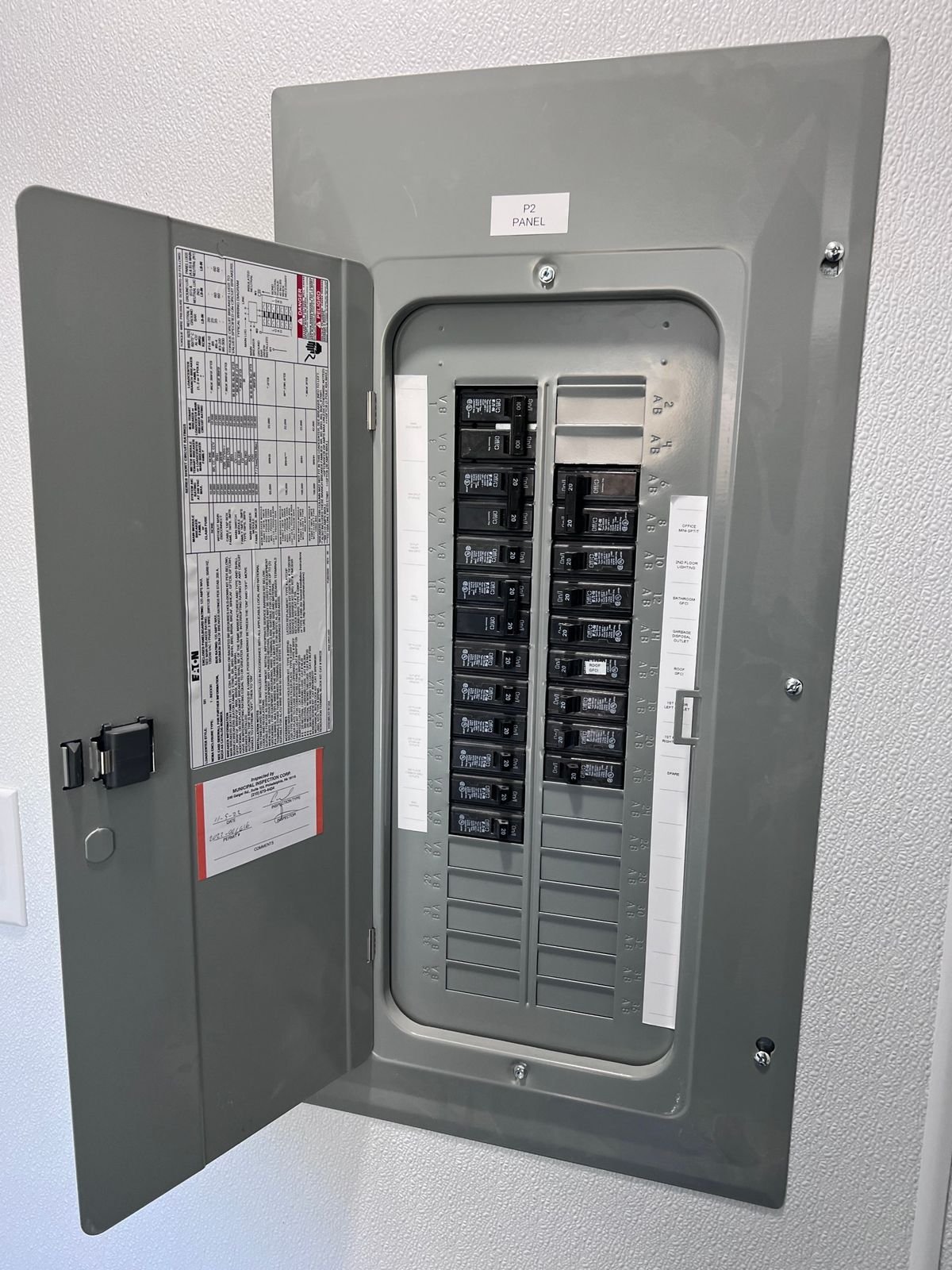
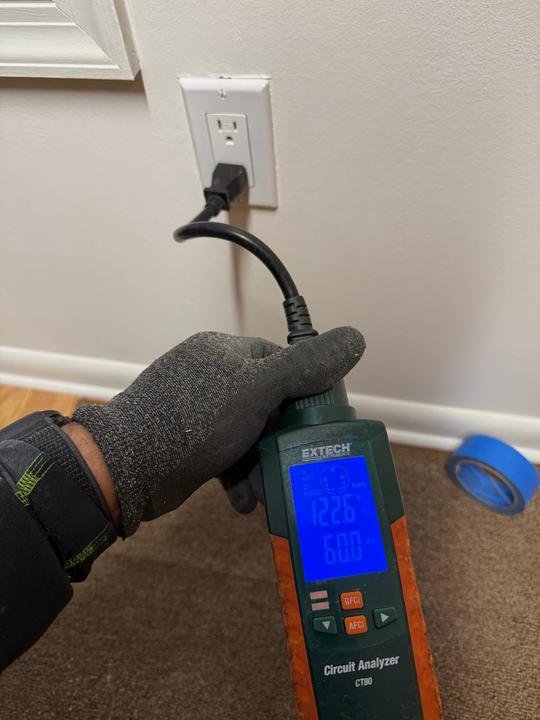
Every charger circuit lands on a labeled breaker and gets tested before we leave.
Electric Vehicle Charger Installation Services in Philadelphia, PA
Pick the setup that matches where you park and how you drive. Every install starts at your panel, because a charger is only as good as the circuit behind it.
Level 2 Home Charger Installation
A hardwired wall charger on its own 240-volt circuit, mounted in your garage or on an outside wall near where you park.
- •Hardwired units up to 48 amps
- •Placed where the cable reaches your charge port
- •App and charging schedule setup
Commercial EV Charging Stations
Level 2 charging ports for offices, shops, apartment lots and small fleets, planned around your building's service capacity.
- •Load study of your electrical service
- •Networked chargers for access and billing
- •Planned around PECO rebate rules
240-Volt EV Charging Points
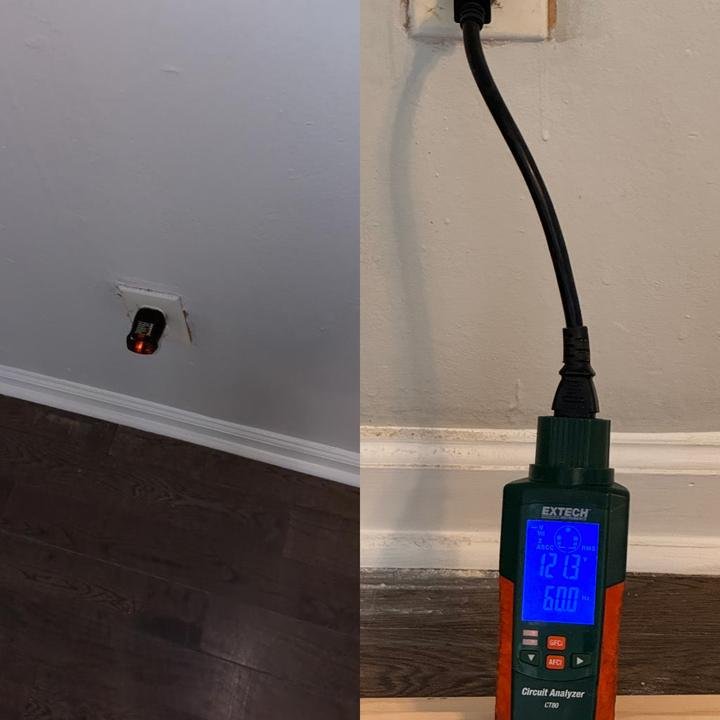
A NEMA 14-50 or 6-50 outlet for a plug-in charger, on a dedicated circuit with the GFCI protection the code requires.
- •Heavy-duty receptacle rated for the load
- •GFCI protection per NEC 625.54
- •A good fit for portable chargers
Panel Upgrades for EV Charging
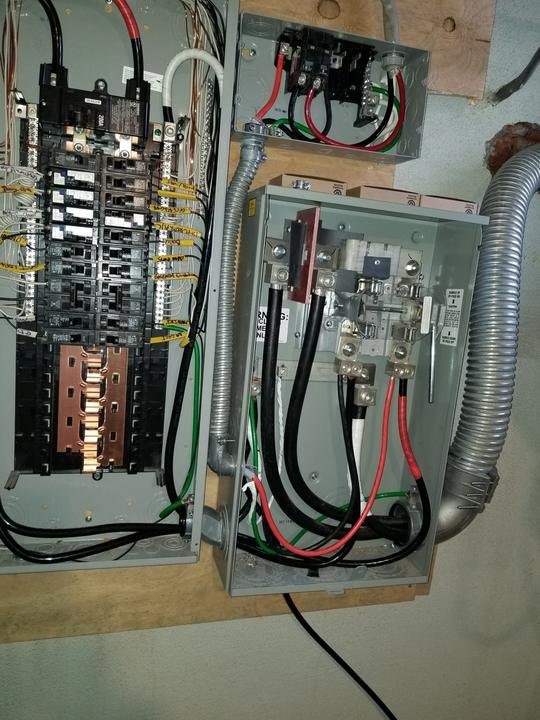
When the load calculation comes up short, we upgrade the panel or service so the charger and the rest of the house run without tripping.
- •100 to 200 amp service upgrades
- •Room for a 2-pole breaker
- •PECO shutoff and reconnect scheduled
Load Management & Two-EV Homes
Chargers and devices that share power or slow charging when the house is busy, which can avoid a service upgrade.
- •Power sharing between two chargers
- •Load-limiting devices
- •Counted in the load calculation
Driveway, Garage & Curbside Chargers
Outdoor-rated chargers on walls or pedestals, with wiring protected in conduit. Curbside chargers go through Streets Department review.
- •Outdoor-rated enclosures
- •Pedestal mounts
- •Underground conduit runs
Residential EV Charger Installation in Philadelphia, PA
Most home installs come down to three questions: can your service carry another large load, how far is the panel from where you park, and will the charger live indoors or outside. In many Philadelphia rowhomes the panel sits in the basement while the car parks out back, so the wire route matters as much as the charger.
Garage
An attached or rear garage keeps the charger out of the weather and is usually the simplest install. We run the circuit from the panel, often through the basement ceiling, and mount the charger where its cable reaches your charge port.
- Indoor-rated charger
- Exposed wire run in conduit
- Cable within 25 feet of the port
Driveway or Rear Wall
Outside, we use outdoor-rated equipment and mount it on the wall or on a pedestal where bumpers and weather will not damage it. A detached garage or a pedestal gets its circuit through buried conduit.
- Outdoor-rated enclosure
- Wall or pedestal mount
- Buried conduit to a detached garage
Street Parking Only
A charger at the curb is possible in Philadelphia, but it sits in the public right-of-way. It needs approval from the Streets Department and the Art Commission, and the adjacent property owner has to authorize the application. We tell you early if your block can meet the rules.
- Pedestal 18 inches from the curb, next to a parking lane
- Sidewalk at least 6 feet wide
- At least 10 feet from hydrants and transit stops
- Underground conduit, no overhead wire
What we check before we quote
- 01Panel brand, age and open breaker spaces
- 02Service size and your other big loads: AC, range, dryer, electric heat
- 03The wire route from panel to parking spot
- 04Indoor or outdoor mounting surface
- 05Your charger model and your car's charging rate
- 06Wi-Fi signal where you park, if you want app control
Level 1 vs Level 2: What Your Circuit Can Deliver
Level 1 uses the cord that comes with most EVs and a regular 120-volt outlet. At about 1.4 kW it adds charge slowly, which can work if you drive little and plug in for long hours. Level 2 runs on 240 volts, like a dryer, and delivers several times more power. Because EV charging is a continuous load, the NEC requires the breaker to be rated at 125 percent of the charger's output. That is why a 48 amp charger needs a 60 amp circuit.
- Voltage
- 120 V wall outlet
- Equipment
- Cord that comes with the car
- Fits
- Short drives, long plug-in hours
- Voltage
- 240 V dedicated circuit
- Equipment
- Wall charger or 240 V outlet
- Fits
- Daily commuting, two-EV homes
16 A → 20 A breaker · 24 A → 30 A breaker · 32 A → 40 A breaker · 40 A → 50 A breaker · 48 A → 60 A breaker. Your car's onboard charger sets the top speed. A charger bigger than your car can accept will not charge it faster, so we size the circuit to the charger and the car you actually have.
EV Charging Point Installation in Philadelphia: Hardwired or Plug‑In
Both run on a dedicated 240-volt circuit. The difference is how the charger connects, how much power it can draw, and whether it stays on the wall.
Match the plug to your car. Newer models use the NACS plug, also called SAE J3400, and others use J1772. Adapters exist for both, so check your carmaker's guidance before you buy a charger.
Commercial EV Charger Installation in Philadelphia, PA
Offices, retail lots, apartment buildings and fleets need more than one charger on a wall. We start with your building's service and demand, then lay out how many Level 2 ports it can support, where the conduit runs, and whether load management lets more ports share the same capacity.
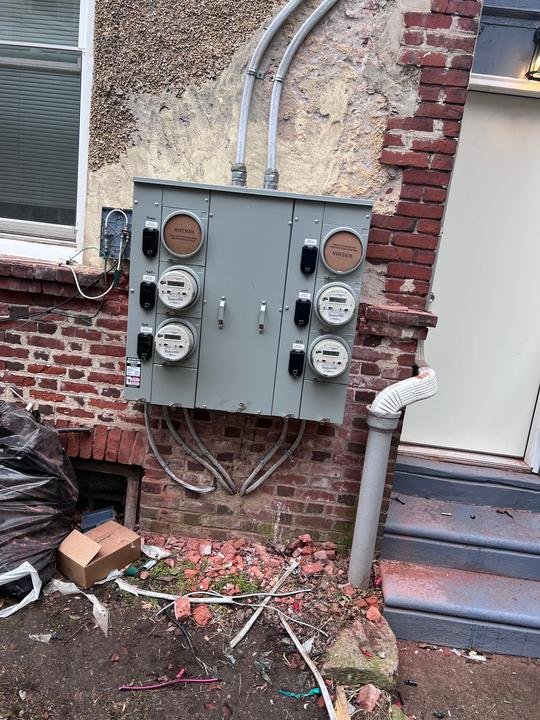
Networked chargers let you control who charges, set pricing and see usage. They also help with PECO's Level 2 rebate, since recipients share charger data for two years. In Philadelphia, chargers at anything other than a one- or two-family home need permit plans, and Level 3 DC fast chargers need a separate building permit.
Adding chargers to existing parking without changing the spaces, aisles or required landscaping does not need a zoning permit in Philadelphia. Changing the parking layout does.
PECO Level 2 Rebate Estimator
- Public Benefit Charging. Up to 50% of project costs for public chargers in Environmental Justice Areas, and for local governments, nonprofits and transit.
- DC Fast Charging Demand Credit. A demand charge credit for Level 3 chargers, available through May 31, 2029.
Estimate only. PECO sets eligibility, requires the application before work starts, and funds are limited. See PECO's program page.
EV Charger Permits in Philadelphia and the Main Line
Every EV charger needs an electrical permit. Who issues it, and what else applies, depends on whether your address is in the city or in a township.
Inside Philadelphia
L&I- 01Electrical permit
Required for every EV charger. Filed with L&I by a licensed electrical contractor, who must hold EVITP certification for any EV charger permit since July 1, 2026.
- 02EZ permit for houses
One- and two-family homes can skip drawings when the job meets the standard and the contractor holds EVITP certification.
- 03Zoning
Not needed when chargers sit within existing parking and the spaces, aisles and landscaping stay the same.
- 04Curbside chargers
Streets Department and Art Commission approval, plus a footway permit to restore the sidewalk.
- 05Historic & flood areas
Historical Commission approval first for listed properties. Flood hazard areas may add rules.
- 06Level 3 DC fast chargers
A separate building permit on top of the electrical permit.
Main Line Townships
Local officeEach township issues its own electrical permit and sends its own inspector or approved inspection agency.
- Lower MerionMontgomery County
- Upper MerionMontgomery County
- RadnorDelaware County
- TredyffrinChester County
- EasttownChester County
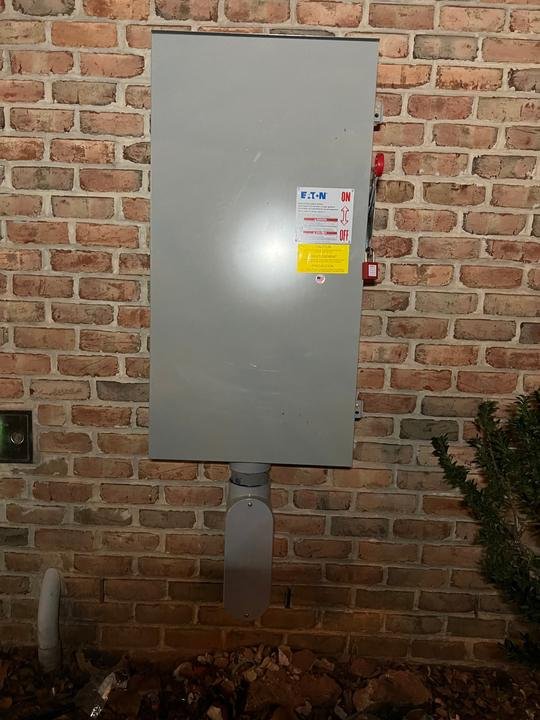
Sources: L&I EZ EV Charger Permit Standard · L&I zoning FAQ for EV chargers
What Drives the Cost of an EV Charger Installation
No two installs cost the same, because no two panels and parking spots are the same. Distance, wall finishes, outdoor mounting and your panel's capacity move the price most. Send photos of your panel and parking spot first, and we can tell you what the job likely involves before the visit.
- Load calculationIncluded
- Two-pole breaker sized at 125%Included
- Wire run, panel to chargerBy distance
- Conduit and wall or pedestal mountBy location
- ChargerYour choice
- Permit and inspectionFiled by us
- Panel or service upgradeOnly if needed
EV charger incentives, as of 2026
-
June 30, 2025Pennsylvania EV rebate ended
The state's Alternative Fuel Vehicle Rebate closed.
-
June 30, 2026Federal 30C credit ended
Home chargers installed after this date do not qualify.
-
NowPECO Smart Driver
PECO pays residential and business customers $50 per car for telling it they bought an EV.
-
Through May 31, 2029PECO commercial rebates
Level 2 and Public Benefit programs, while funds last.
Source: PECO EV offers. We are not tax advisors, so check credits with your tax preparer.
How Your EV Charger Installation Works
Four steps from first photo to first charge, with the price in writing before we start.
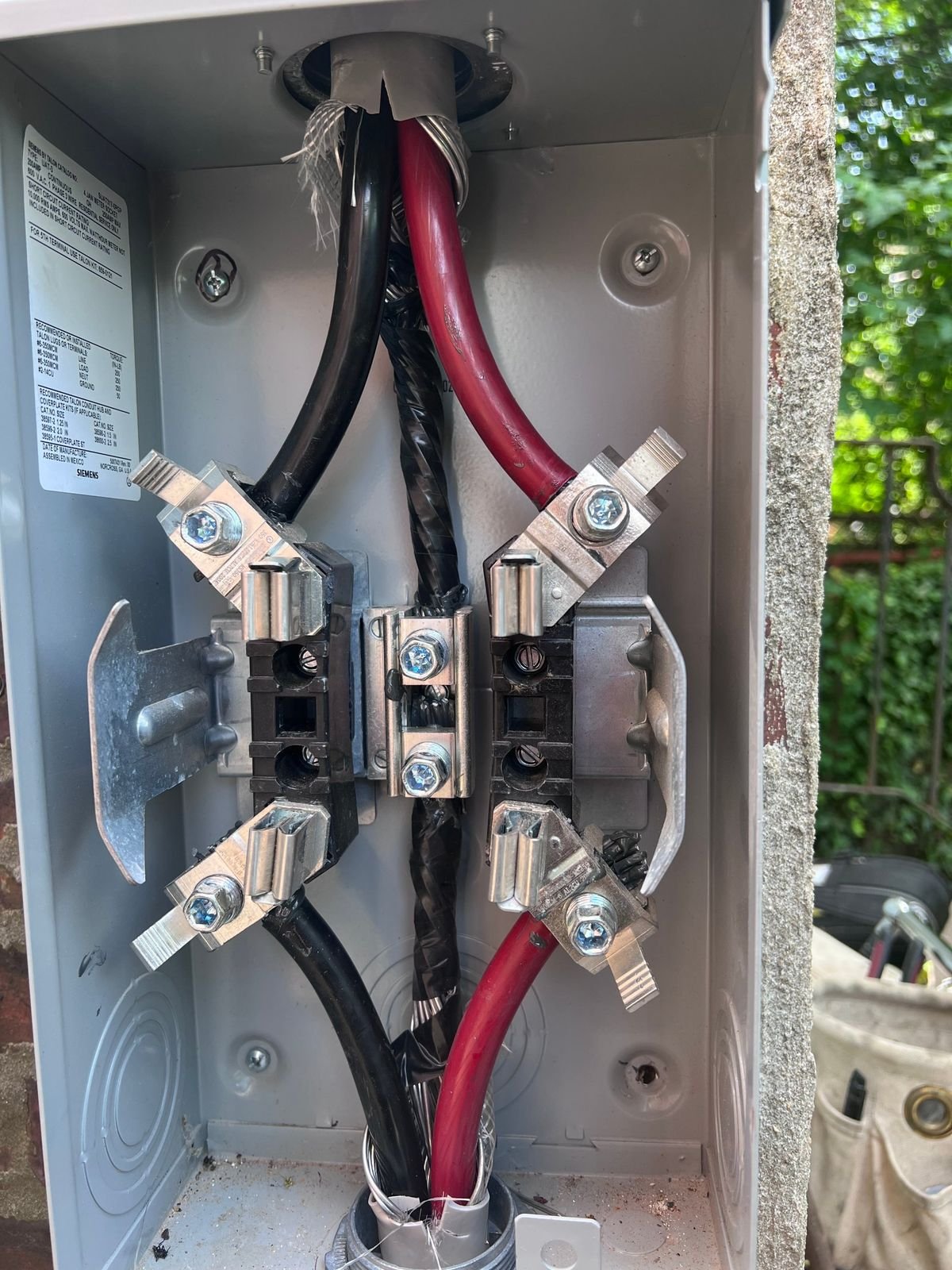
-
01
Photos & First Call
Send photos of your panel, its label and where you park. We ask about your car and charger.
-
02
Load Check & Written Quote
We run the load calculation, plan the route and put the scope and price in writing.
-
03
Permit & Install
We file the permit, run the dedicated circuit and mount the charger.
-
04
Inspection & Handover
We meet the inspector, test the charger and set up the app and charging schedule.
Why Hire a Licensed Electrician for EV Charger Installation in Philadelphia, PA
A Level 2 charger is often the largest load in the house, and it runs for hours at a time. We treat it that way: the panel, the breaker size and every connection get checked before the charger goes on the wall.
Panel First
We check your panel and service before we quote a charger, so you do not pay for a circuit your house cannot carry.
Torqued to Spec
Every high-amp connection is tightened to the maker's torque value with a calibrated tool, as the City's EV standard requires.
Clean Handover
We test the charger, label the breaker, clean up and show you the charging settings.

What Our Customers Say
Real reviews from our customers on Networx.
“Good work, reasonable, prompt AND pleasure to work with. Highly recommended.”
“TOTALLY SATISFIED. Great price, work was completed on time and very professional.”
“It's all I was looking for: great price, professional, and done right…”
EV Charger Installation Across Philadelphia and the Main Line
From our Wayne office we install home and commercial chargers in four counties, and we file with the right permit office for each address.
Philadelphia County
- Philadelphia
- Center City
- South Philadelphia
- West Philadelphia
- University City
- Overbrook
Montgomery County
- Lower Merion
- Ardmore
- Bryn Mawr
- Bala Cynwyd
- Upper Merion
- King of Prussia
Delaware County
- Wayne
- Radnor Township
- St. Davids
- Villanova
- Rosemont
Chester County
- Berwyn
- Strafford
- Devon
- Paoli
- Tredyffrin
- Easttown
EV Charger Installation FAQs for Philadelphia
61 questions drivers and property owners ask us most. Filter by topic, or search if you already know what you need.
How much does EV charger installation cost in Philadelphia?
It depends on the distance from your panel to where you park, whether your service has room for the load, and whether the charger goes indoors or outside. We give you a written price after we see your panel and parking spot. Send photos first and we can tell you what the job likely involves.
Can I install a Level 2 charger with 100 amp service?
Often, yes. A load calculation tells us. If the numbers come up short, a lower-amp charger, a load management device or a panel upgrade solves it.
Should I get a hardwired charger or a NEMA 14-50 outlet?
Hardwired chargers can run up to 48 amps and have no outlet to wear out. A NEMA 14-50 outlet tops out at 40 amps of charging but lets you unplug and take the charger with you. Both are solid choices.
Is there still a federal tax credit for home EV chargers?
No. The federal 30C charger credit ended June 30, 2026, so chargers installed after that date do not qualify. Ask your tax preparer about anything installed before then.
What makes one EV charger install cost more than another?
The length of the wire run, finished walls or masonry in the way, trenching for a detached garage or pedestal, outdoor equipment, and whether the panel needs an upgrade. The charger itself also varies in price.
Can I buy my own charger?
Yes. Tell us the model before the visit. We confirm it is listed equipment and that it fits your circuit and mounting spot.
Can I save money by charging at night?
If your electric rate prices power by time of day, scheduled charging in your car or charger app lets you charge in the cheaper hours. We set the schedule up for you at handover.
Do you give a written quote?
Yes. You get the scope and price in writing before any work starts, so the number does not change halfway through the job.
What is the Philadelphia EZ permit for EV chargers?
It is an L&I standard that lets qualifying chargers at one- and two-family homes be permitted without drawings. The job has to meet the standard, and the contractor must hold EVITP certification. Other jobs need plans.
Can I install a charger at the curb in front of my house?
It is possible but needs Streets Department and Art Commission approval. The pedestal goes 18 inches from the curb, next to a parking lane, on a sidewalk at least 6 feet wide, at least 10 feet from hydrants and transit stops, with wiring in underground conduit.
Who inspects the installation?
In Philadelphia, a licensed electrical inspection agency hired for the permit does the inspections, and the City issues a Certificate of Approval once they pass. In the suburbs, it is your township's inspector or its approved agency. We schedule it and meet them on site.
Do commercial chargers need extra permits?
In Philadelphia, chargers at anything other than a one- or two-family home need permit plans, and Level 3 DC fast chargers need a separate building permit.
Is Level 1 charging enough?
It can be if you drive few miles a day and can plug in for long hours. Most drivers who commute or take road trips want Level 2.
Can you install a charger outside on my driveway?
Yes. We use outdoor-rated equipment, run exposed wire in conduit and mount the charger on a wall or pedestal where cars and weather will not damage it.
My panel is in the basement and I park out back. Is that a problem?
No. That is a common Philadelphia rowhome layout. We route the circuit through the basement and out the rear wall in conduit, and the run length sets the wire size.
Will my charger work during a power outage?
No. A standard charger needs grid power. Setups that power the house from the car need special equipment so power cannot flow back onto utility lines, and we review those case by case.
How do you know if my panel can handle a charger?
We run an NEC load calculation using your home size and your existing large loads, like AC, range, dryer and electric heat. It shows whether the service can carry the charger.
When do I need a new panel for an EV charger?
When there is no room for a 2-pole breaker, the load calculation fails even with load management, or the panel is one we would not trust with a continuous load.
Does an EV charger need its own circuit?
Yes. The charger runs on an individual branch circuit from your panel. Sharing a dryer or other appliance circuit is not a dedicated EV circuit.
Should I add surge protection with my charger?
It is worth it. A whole house surge protector at the panel helps guard the charger electronics and the rest of your home. We can install both on the same visit.
Do I need Wi-Fi for my charger?
Only for app features like remote scheduling and energy tracking. Check the signal where you park, since a garage or rear wall can block it.
Does a NEMA 14-50 outlet for EV charging need GFCI protection?
Yes. The 2020 NEC requires GFCI protection on receptacles installed for EV charging. We install a GFCI breaker or device rated for the circuit.
Can I use an extension cord with my EV charger?
No. Charger makers warn against it. If the cable does not reach, the fix is to move the charger or add a closer outlet on a proper circuit.
What commercial EV charger installation do you offer?
Level 2 charging ports for offices, retail lots, apartment and condo parking, and small fleets. Each job starts with a review of your building service and parking layout.
What is the PECO Public Benefit Charging Program?
It covers up to 50% of project costs for publicly accessible chargers in Environmental Justice Areas, and for local governments, 501(c)(3) nonprofits and public transit.
Do commercial chargers need to be networked?
Not always, but networked chargers let you control access, set pricing and track use. PECO Level 2 rebate recipients share charger data for two years, which networked chargers make simple.
Does PECO help with DC fast charging bills?
PECO offers a demand charge credit for commercial customers with Level 3 chargers, available through May 31, 2029. Ask PECO for the current terms.
Do apartment buildings need special planning?
Yes. Multifamily chargers need permit plans in Philadelphia, a load study of the building service, and a plan for who pays for the power.
Do I need to be home for the install?
Someone needs to let us in and give access to the panel and parking area. We like to walk you through the charger at the end.
Do you test the charger before you leave?
Yes. We test it, with your car if it is home, label the breaker and set up the app and charging schedule.
How do I book an EV charger installation?
Call (267) 977-2106 or send the booking form below. We call you back to set up a visit.
Do I need a permit to install an EV charger in Philadelphia?
Yes. Philadelphia L&I requires an electrical permit for every EV charger installation. In Lower Merion, Upper Merion, Radnor, Tredyffrin and Easttown the permit comes from the township. We file it and meet the inspector.
How fast does a Level 2 charger charge my car?
It depends on the charger's output and your car's onboard charger. A 40 amp charger delivers about 9.6 kW, several times what a 120-volt outlet gives, so most drivers recover a normal day of driving overnight.
Does PECO offer rebates for commercial EV chargers?
Yes. PECO's Level 2 commercial pilot pays $2,000 per port, or $3,000 per port in an Environmental Justice Area, up to $60,000 a year. You must apply before the project starts, and funds are limited.
How long does an EV charger installation take?
A straightforward install near the panel is often done in one visit. Jobs that need a panel upgrade, trenching or a long run take longer, and your quote spells out the schedule.
Does a panel upgrade add a lot to the cost?
A panel or service upgrade is a separate, larger job. The load calculation tells us whether you need one, and load management can sometimes avoid it.
Does PECO give homeowners a rebate for an EV charger?
PECO's Smart Driver program pays residential customers $50 per car for telling PECO they bought an EV. Its larger charger rebates are for commercial customers.
Does Pennsylvania still offer an EV rebate?
The state's Alternative Fuel Vehicle Rebate for buying EVs ended June 30, 2025. Commercial charging grants change often, so check with PA DEP for current rounds.
Who can pull an EV charger permit in Philadelphia?
A licensed electrical contractor does the work and files the permit with L&I. Since July 1, 2026, the contractor on any Philadelphia permit that includes an EV charger must also hold EVITP certification.
Do I need a zoning permit for an EV charger?
Not if the chargers sit within existing parking and do not change the spaces, aisles or required landscaping, or block required spaces. Any other layout needs a zoning permit.
My home is in a historic district. Can I still get a charger?
Yes, but properties listed by the Philadelphia Historical Commission need its approval before the EZ permit applies. We plan the location with that review in mind.
Which township handles my permit in Wayne?
Wayne crosses Radnor, Tredyffrin and Upper Merion Townships, so the permit goes to the township your property sits in. We confirm it from your address.
What is the difference between Level 1 and Level 2 charging?
Level 1 uses a 120-volt outlet and the cord that comes with most EVs, at about 1.4 kW. Level 2 uses 240 volts and delivers several times more power, depending on the charger and your car.
Where should the charger go?
Close to where your car's charge port ends up when you park. The code limits the charging cable to 25 feet unless the charger has a cable management system.
Can you install a charger in a detached garage?
Yes. We run the circuit from the house in buried conduit or along another approved route. If the garage has a subpanel, we check that it can carry the charger.
Can I charge two EVs at home?
Yes. Two chargers with power sharing split one circuit between both cars, or a load calculation may allow two full circuits. We size it to your service.
I live in a condo or apartment. Can I get a charger?
Usually you need approval from the building or association first, and a circuit fed from your own meter or the building's. These jobs need permit plans in Philadelphia.
What is EV load management?
A device or charger feature that slows or pauses charging when the rest of the house is drawing a lot of power. The code lets a listed system count toward the load calculation, which can avoid a service upgrade.
Will you add a charger to a Federal Pacific or fuse panel?
We will not add a long, high-amp load to a fuse box or a panel brand with known breaker problems, such as Federal Pacific Stab-Lok. We show you what we found and quote the fix.
What size breaker does my charger need?
125 percent of the charger's output: 40 amps for a 32 amp charger, 50 amps for 40 amps, 60 amps for 48 amps. Equipment rated over 60 amps also needs a disconnect within easy reach.
Which charger brands do you install?
Any listed Level 2 charger. We install it to the maker's instructions, which the code and the City's EV standard both require.
Which plug does my car need?
Newer models use the NACS plug, also called SAE J3400, and many others use J1772. Adapters exist for both. Check your carmaker before you buy a charger.
Can I plug a charger into my dryer outlet?
Not as a long-term setup. A dryer outlet sits on a circuit sized for the dryer, and unplugging it often wears the receptacle. A dedicated EV circuit is the safe fix.
How many amps can a home charger use?
Most hardwired home chargers top out at 48 amps on a 60 amp circuit. Your car may accept less, and we set the charger to match your circuit.
How many chargers can my building support?
That depends on your service size and current demand. A load study shows the spare capacity, and load management lets more ports share it.
When do I apply for a PECO commercial rebate?
Before the project starts. PECO requires the application before construction, so we plan the schedule around approval.
What does DC fast charging need?
Level 3 chargers draw far more power than Level 2 and usually need three-phase service and utility coordination. In Philadelphia they also need a separate building permit.
Can you add chargers to my parking lot without a zoning permit?
In Philadelphia, yes, if the chargers fit within existing parking and do not change spaces, aisles or required landscaping. Changing the layout needs a zoning permit.
What do you need from me to quote an EV charger?
Photos of your panel with the door open, the panel label, the main breaker and your parking spot, plus your car and charger model if you have them.
Will my power be off during the install?
Usually only briefly while we connect the new breaker. A service upgrade needs a longer PECO shutoff, and we tell you the time in advance.
Which areas do you serve for EV charger installation?
Philadelphia, Lower Merion, Upper Merion, Wayne and Berwyn, plus nearby Main Line towns. Ask if you are close by.
No questions match that search. Call (267) 977-2106 and ask us directly.
Showing 12 of 61
Ready for Home or Commercial EV Charging?
Tell us what you drive and where you park. Electrical Hazards, Inc. will call you back, check your panel and give you a written quote before any work starts.
- 1We call you backUsually to ask for panel and parking photos.
- 2We check the loadThen send a written scope and price.
- 3We schedule the installAnd file the permit before we start.