
Rowhomes
Service and water lines often enter at the front wall, with little open soil nearby. We plan rod locations around sidewalks, shared walls and buried lines.
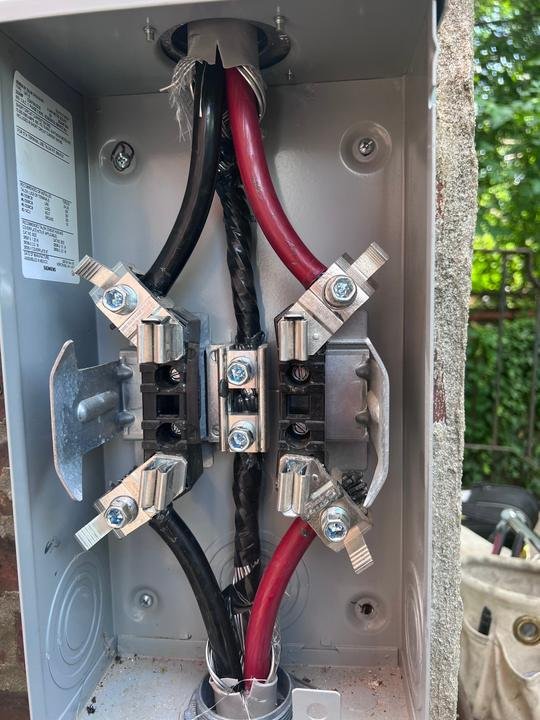
Real job photo: New Meter Socket Wiring
We test, repair and install grounding and bonding for Philadelphia and Main Line homes and businesses: ground rods, grounding electrode conductors, water and gas pipe bonding, CSST bonding and intersystem bonding, all built to NEC Article 250 by a City-licensed electrical contractor.
Grounding and bonding problems hide behind walls and under floors until something goes wrong. These are the signs that tell you to have the system checked by a licensed electrician.
Metal that shocks you is energized. Stop using it and call right away.
If the ground wire was clamped to that pipe, your home may have lost its main grounding electrode.
A three-prong outlet does not prove there is a ground behind it.
Most surge protectors need a working ground to divert a spike.
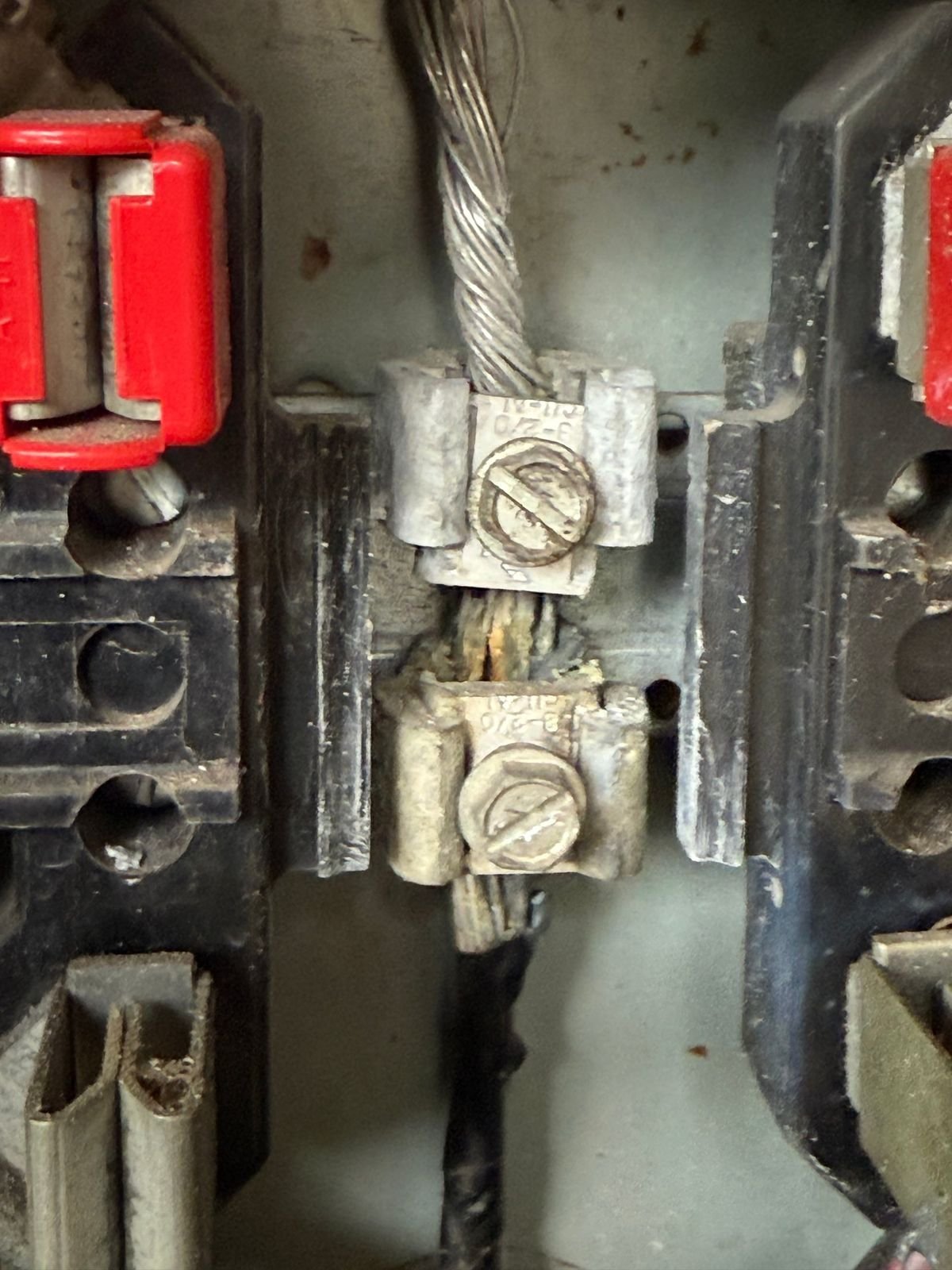
A clamp that turns by hand or shows green corrosion is not a solid connection.
Buyers' inspectors often call out missing water or gas bonds.
Yellow CSST needs its own direct bond back to the electrical system.
Communications systems belong on an intersystem bonding termination at the service.
Electrical grounding connects your electrical system to the earth, so lightning and utility surges have a path out and the system holds a stable voltage. Our electrical grounding services in Philadelphia start where the service enters the building and follow every conductor to its electrode.
Two 8-foot rods at least 6 feet apart, unless a single rod tests at 25 ohms or less to earth.
Counts as an electrode only with at least 10 feet of metal pipe in the earth. The connection goes within 5 feet of where it enters, and it always needs a second electrode.
Rebar or a copper conductor in the footing, where the building has one. An existing one can stay out of the system if the rebar cannot be reached without breaking concrete.
The wire from the service to the electrodes, sized under NEC 250.66 and protected where it can be damaged.
Metal underground gas piping, and in Philadelphia, aluminum electrodes.
We contact PA One Call so buried utility lines are marked before any digging.
Bonding ties metal parts together and back to the panel. If a hot wire touches a pipe, the current has a low-resistance path home and the breaker trips. Our electrical bonding services cover the water piping, gas piping, communications systems and anything else the code says can become energized, and every electrical bonding installation is sized and clamped to the code.
What the code asksBonded to the service under NEC 250.104(A)
What we installA sized bonding jumper and listed clamps, with jumpers around water meters where needed
What the code asksBonded under NEC 250.104(B), often through the appliance circuit ground
What we installWe confirm the path, or add a bonding jumper
What the code asksA direct bond, 6 AWG copper or larger, 75 feet or less
What we installA clamp on rigid pipe or a brass CSST fitting, never on the tubing
What the code asksAn intersystem bonding termination at the service, NEC 250.94
What we installA listed termination installers can bond to
What the code asksEquipotential bonding under NEC Article 680
What we installBonding of metal parts, equipment and the water
What the code asksInterconnected building frames bonded under NEC 250.104(C)
What we installBonding jumpers sized to the service
CSST rules: ICC CodeNotes, 2021 CSST bonding
Residential grounding and bonding problems in Philadelphia often come from later work: a new plastic water line, a gas line change, a cable install or a panel swap that left the old ground behind.
Service and water lines often enter at the front wall, with little open soil nearby. We plan rod locations around sidewalks, shared walls and buried lines.
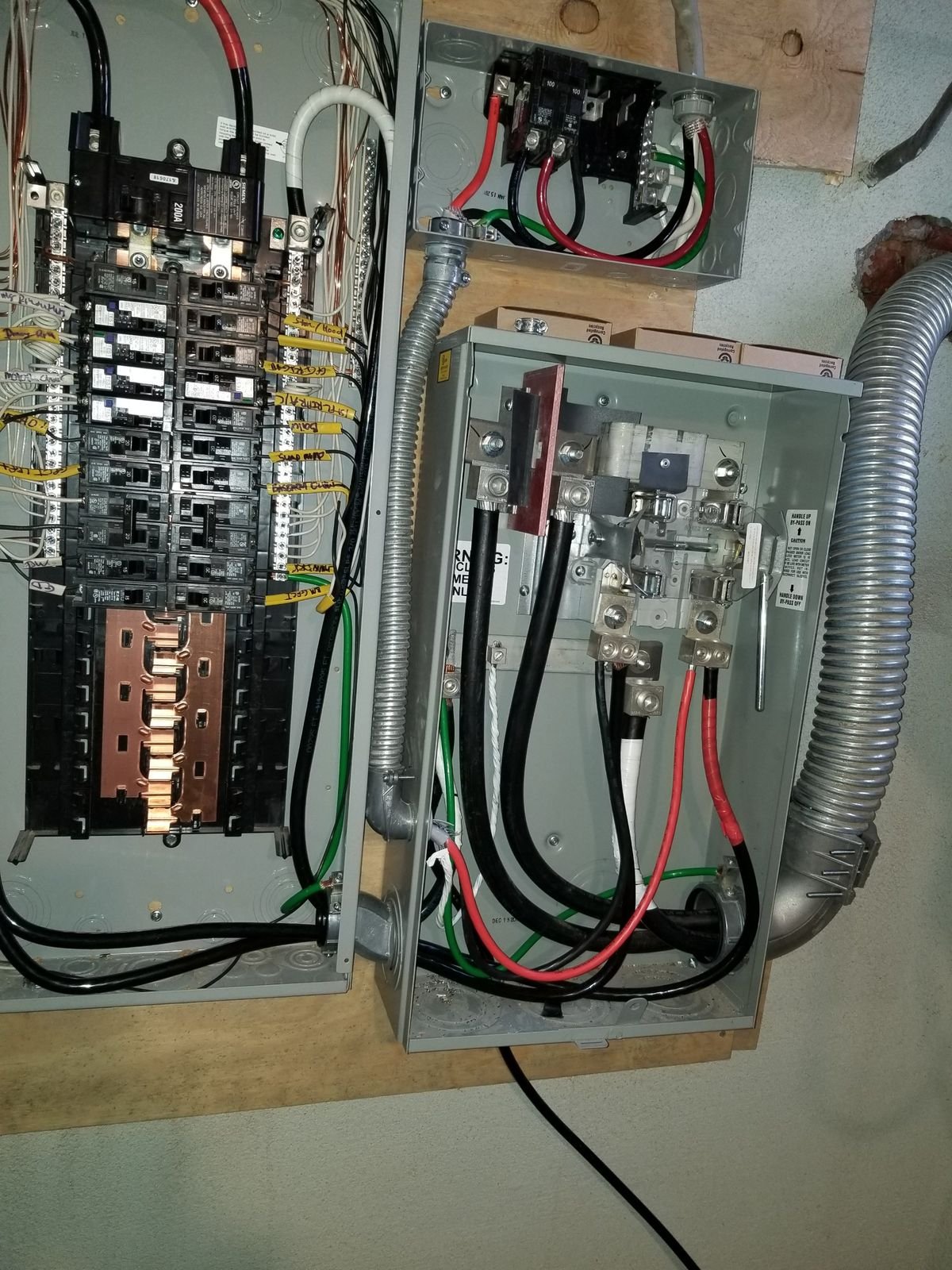
Real job photo: New Meter Socket Wiring
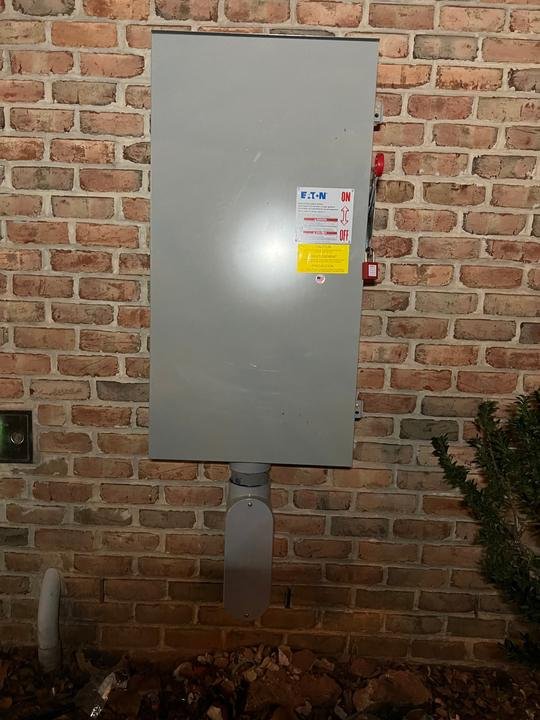
More room for rods, and longer runs to them. A service upgrade on these homes in Philadelphia also adds an outdoor emergency disconnect.
Real job photo: Outdoor Safety Disconnect
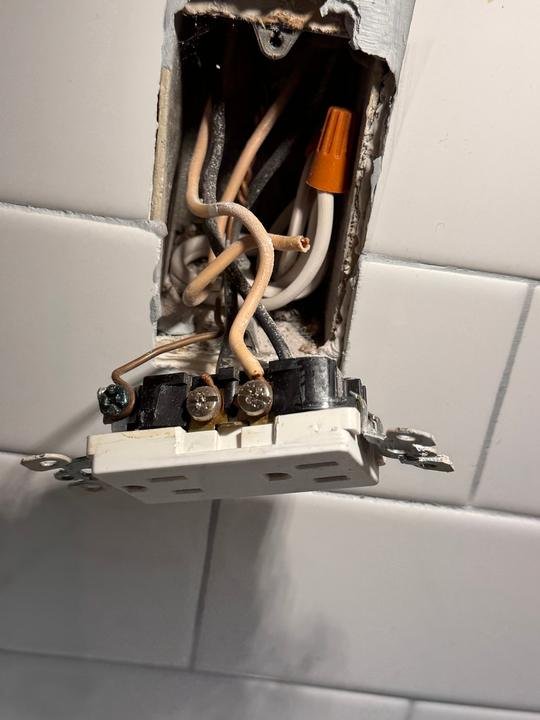
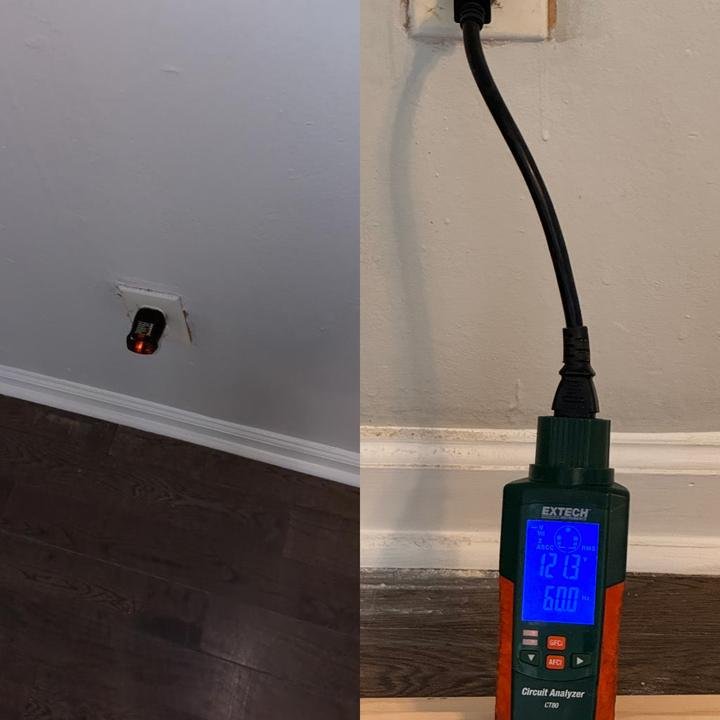
Two-prong circuits have no equipment ground. The right fix depends on the circuit: a new ground wire, GFCI protection or rewiring.
Real job photo: Hazard Found: Worn Outlet Wiring
Swapping a two-prong outlet for a three-prong one without a ground behind it fails inspection and fools surge protectors. These are the three fixes the code allows.
Run an equipment grounding conductor to the outlet. This gives surge protectors and electronics a true ground.
A GFCI outlet or breaker protects people from shock on a two-prong circuit. The outlet is labeled "No Equipment Ground."
Replace old wiring with grounded cable from the panel to every outlet on the circuit.
Commercial grounding and bonding in Philadelphia covers more than one ground rod. Transformers, building steel, metal piping, meter centers and long feeders each need the right grounding and bonding path, sized to the equipment and checked by the inspector.
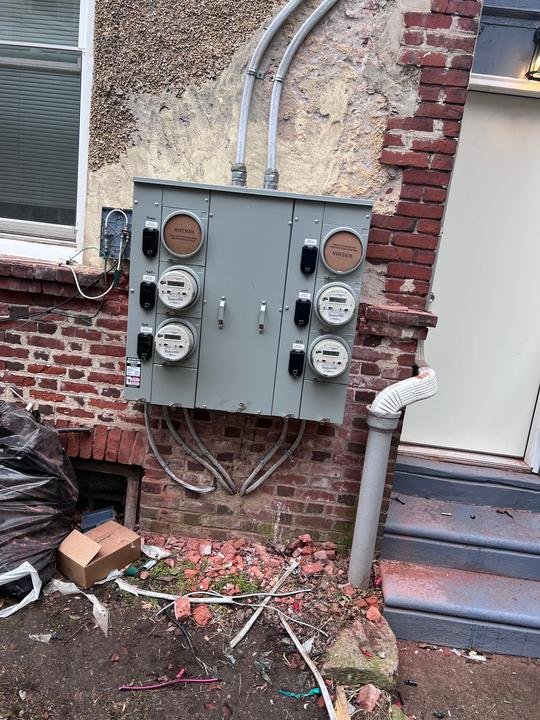
Electrodes and grounding electrode conductors sized to the service.
Separately derived systems with their own bonding jumper and electrode connection, NEC 250.30.
Interconnected steel and metal piping bonded back to the service.
Equipment grounding conductors sized under NEC 250.122.
Multi-unit services with a disconnect and bonding for each unit.
Dedicated grounding paths where an equipment maker requires them.
Every job starts by tracing the system you have, so you only pay for what is actually missing.
We follow the grounding conductor from the panel to every rod, pipe and clamp.
Missing rods, cut pipes, loose clamps, missing bonds and two-prong circuits get written down.
You get every fix and the price in writing before work starts.
We install the rods, conductors and bonds, test what we touched, and permitted work gets inspected.
Grounding and bonding contractors in Philadelphia must hold a City electrical contractor license. These are the credentials behind our work.
Grounding mistakes stay hidden for years, then show up as a shock, a fried surge protector or a failed inspection. Electrical Hazards, Inc. holds City of Philadelphia electrical contractor license #37352, and an ICC Certified Commercial Electrical Inspector on our team checks grounding and bonding the way an inspector will.

Grounding and bonding work is priced by what is missing. Most jobs fall into one of these three scopes, and you get the exact fixes and price in writing before any work starts.
Real reviews from our customers on Networx.
“Good work, reasonable, prompt AND pleasure to work with. Highly recommended.”
Job: Outlets, GFCIs, meter box and breakers to bring an old house up to code
“TOTALLY SATISFIED. Great price, work was completed on time and very professional.”
Job: New 220-volt line
“It's all I was looking for: great price, professional, and done right…”
Job: 220-volt line
We work across four counties and file with the permit office for each address.
63 questions homeowners and building owners ask us most. Filter by topic, or search if you already know what you need.
Grounding connects the electrical system to the earth through electrodes like ground rods. Bonding connects metal parts to each other and to the panel so a fault trips the breaker. A safe system needs both.
Two rods at least 6 feet apart, unless a single rod tests at 25 ohms or less to earth. A metal water pipe electrode also needs a second electrode.
Maybe not. If the ground wire was clamped to the old metal pipe, it may now lead nowhere. We check it and add ground rods if needed.
Yes, including service grounding, transformer grounding, building steel and piping bonds, and feeder grounding for storefronts, offices and multi-unit buildings.
It gives lightning and utility surges a path to earth and keeps the electrical system at a stable voltage relative to the ground.
No. Bonding and the equipment grounding conductors do that work. The earth path has too much resistance to trip a breaker reliably.
The wire from your service to the electrodes, sized to the service under NEC 250.66.
That is the equipment grounding conductor. It bonds outlets, fixtures and appliances back to the panel.
Yes. Any tingle from water or metal fixtures means current is where it should not be. Treat it as urgent.
The outlet has no working connection to the equipment grounding conductor. It may be a two-prong circuit, a loose wire or a broken path.
It is a real safety item and a common inspection note. Most missing bonds are fixed in one visit.
A standard rod is 8 feet long and is driven its full length into the earth.
Only with at least 10 feet of metal pipe in the earth, and it must always be supplemented by another electrode, usually ground rods.
A concrete-encased electrode: rebar or a copper conductor in the footing. Newer buildings often have one.
The grounding electrode conductor is sized to your service conductors under NEC 250.66.
Metal water piping, metal gas piping, communications systems through an intersystem bonding termination, and pools or hot tubs if you have them.
Black arc-resistant CSST certified to CSA/ANSI LC-1 does not need the extra direct bond, unless the system also has yellow CSST.
A jumper around the meter keeps the bonding path continuous if the meter is removed or has plastic parts.
Yes. NEC Article 680 requires equipotential bonding of metal parts, equipment and the water for permanently installed pools and many hot tubs.
Often. Two-prong circuits, clamps on pipes that were later replaced, and no intersystem bonding are common. We check all three.
Yes. Both depend on a sound grounding and bonding system, so we check it first and fix what is missing.
No. A GFCI protects people from shock, but it does not give electronics or surge protectors a ground.
In Philadelphia, a new service or service upgrade on these homes adds an outdoor emergency disconnect. Attached rowhomes of three stories or less are exempt.
Yes. A transformer creates a separately derived system, which needs its own system bonding jumper and grounding electrode connection under NEC 250.30.
An outlet with a separate grounding path, used when an equipment maker requires it. It is still part of the grounding system, not a separate earth ground.
Grounding done as part of a service upgrade needs plans in Philadelphia. Smaller corrections can fall under a simpler permit. We confirm the path before work starts.
Whether rods are needed, the size and length of the grounding conductor, how many bonds are missing, access to soil and piping, and whether the work is part of a service upgrade.
Grounding done with a panel or service job is covered by that permit. We tell you whether a standalone repair needs its own.
Yes, with every fix listed before work starts.
Access to the panel, the electric meter, the water line where it enters, the gas meter and any inspection report.
Yes. We test the outlets and connections we worked on before we leave.
Call (267) 977-2106 or send the form below. We call you back to set up a visit.
A three-prong outlet does not prove it. An electrician traces the grounding conductor from the panel to the rods or water pipe, checks every clamp and tests the outlets.
Yes. Metal gas piping must be bonded, often through the equipment ground of the appliance circuit. Yellow CSST needs its own direct bond.
Only if there is a ground to connect, or with GFCI protection and a "No Equipment Ground" label. A three-prong outlet with no ground behind it gives false confidence.
It depends on what is missing: a single bond or clamp, new rods and a grounding conductor, or a full system redone with a service upgrade. You get a written price after we trace the system.
If a hot wire touches a metal pipe or box, bonding gives that current a low-resistance path back to the panel so the breaker trips. Without it, the metal can stay energized.
The part that connects to the earth: ground rods, a metal underground water pipe, a concrete-encased electrode in the footing, a ground ring or plates.
Article 250 of the National Electrical Code. Philadelphia's EZ standard for residential service equipment cites the 2020 NEC.
Stop using it and call an electrician right away. A shock from metal plumbing means something is energized.
Its outlet may have no ground, or the ground path is broken somewhere between the outlet and the panel. We trace it and fix the break.
A loose neutral is a more common cause, and the two can show up together. Flicker plus shocks or warm outlets needs a visit soon.
It can make surge protection work poorly, which leaves electronics more exposed to voltage spikes.
The code requires a second rod unless a single rod tests at 25 ohms or less to earth. Two rods spaced at least 6 feet apart meet the rule without the test.
No. Metal underground gas piping is not allowed as a grounding electrode.
Usually, where we can reach soil near the service. We plan around sidewalks, shared walls and buried lines, and contact PA One Call before driving rods.
Clamps can loosen and both can corrode. We check each connection and replace what is damaged.
Corrugated stainless steel tubing is flexible gas line. Yellow CSST needs a direct bond of 6 AWG copper or larger, 75 feet or less, clamped to rigid pipe or a brass fitting.
A bonding point at the service, required by NEC 250.94, where cable, phone, satellite and other low-voltage installers bond their systems.
Not always. If dielectric fittings or plastic connectors break the metal path between the hot and cold piping, a jumper keeps the hot side bonded.
Downstream of the gas meter, on rigid pipe or a brass CSST fitting, never on the corrugated tubing itself.
It is the right time to bring grounding and bonding up to code, and the inspector checks it. We include it in the panel upgrade scope.
Yes, by running an equipment grounding conductor to it. If that is not practical, GFCI protection is a code-approved option.
Installers should bond to an intersystem bonding termination. Older homes often show cable grounds clamped to a water pipe instead, which we correct.
Service grounding, grounding and bonding for transformers, bonding of building steel and metal piping, and equipment grounding for feeders and branch circuits.
Interconnected structural steel that forms the building frame must be bonded under NEC 250.104(C).
Yes, including meter centers with a disconnect for each unit and the bonding between them.
Yes. Send us the report and we quote each item.
Replacing a clamp or adding a water or gas bond is usually small. New rods, a new grounding conductor and an intersystem bonding termination take more.
A licensed electrical inspection agency inspects permitted work, and the City issues a Certificate of Approval once it passes.
Yes, and it saves a second visit, since the service is already shut off.
A bond or clamp repair usually needs no outage. Replacing the grounding electrode conductor may need a short service shutoff.
Philadelphia, Lower Merion, Upper Merion, Wayne and Berwyn, plus nearby Main Line towns.
No questions match that search. Call (267) 977-2106 and ask us directly.
Showing 12 of 63
Electrical Hazards, Inc. will call you back, trace your grounding and bonding, and put every fix and the price in writing before any work starts.